
NFL Betting Rules UK: Pro Odds and Wagering Strategies
 Available in US
Evaluating UK Sportsbook NFL Odds and Markets
The first NFL ticket I ever wrote sat at 13/8 on the Falcons against the Lions at Wembley. That was 2014. I bought it on the walk down Olympic Way, fractional only, no in-play option, and absolutely no idea I'd be doing the same thing eleven seasons later from a phone in a sticky bar in Croke Park while a Dubliner two stools over asked me whether a quarterback sneak counted as a penalty.
A lot has changed. The UK now counts roughly fourteen million NFL fans — about one in five British adults — with the league's domestic office putting the core figure near thirteen million and around four million classed as avid. Our sportsbooks have caught up. Same game parlays, alternative lines, Betfair Exchange markets that get plump by Sunday teatime, RedZone embedded inside the Sky carousel: it's a different sport at a different table from the one I started writing about a decade ago.
What hasn't changed is the regulatory backdrop. Betting on American football from the United Kingdom remains the most punter-friendly framework in the world. It's legal. It's taxed at the operator's end, not yours. It's supervised by a single regulator, the UK Gambling Commission, that has spent the last three years tightening rules on stake limits and affordability rather than carving up jurisdiction by postcode the way the Americans do by state.
The catch is that this generosity comes with rule books. Not just the NFL one, but the settlement code attached to every market you click on. Push handling on a 49-point total, void rules when a coin toss is repeated, dead heat splits on the first touchdown scorer when two players cross the line on the same play — these settle differently across UK sportsbooks, and the difference often costs more than a missed cover.
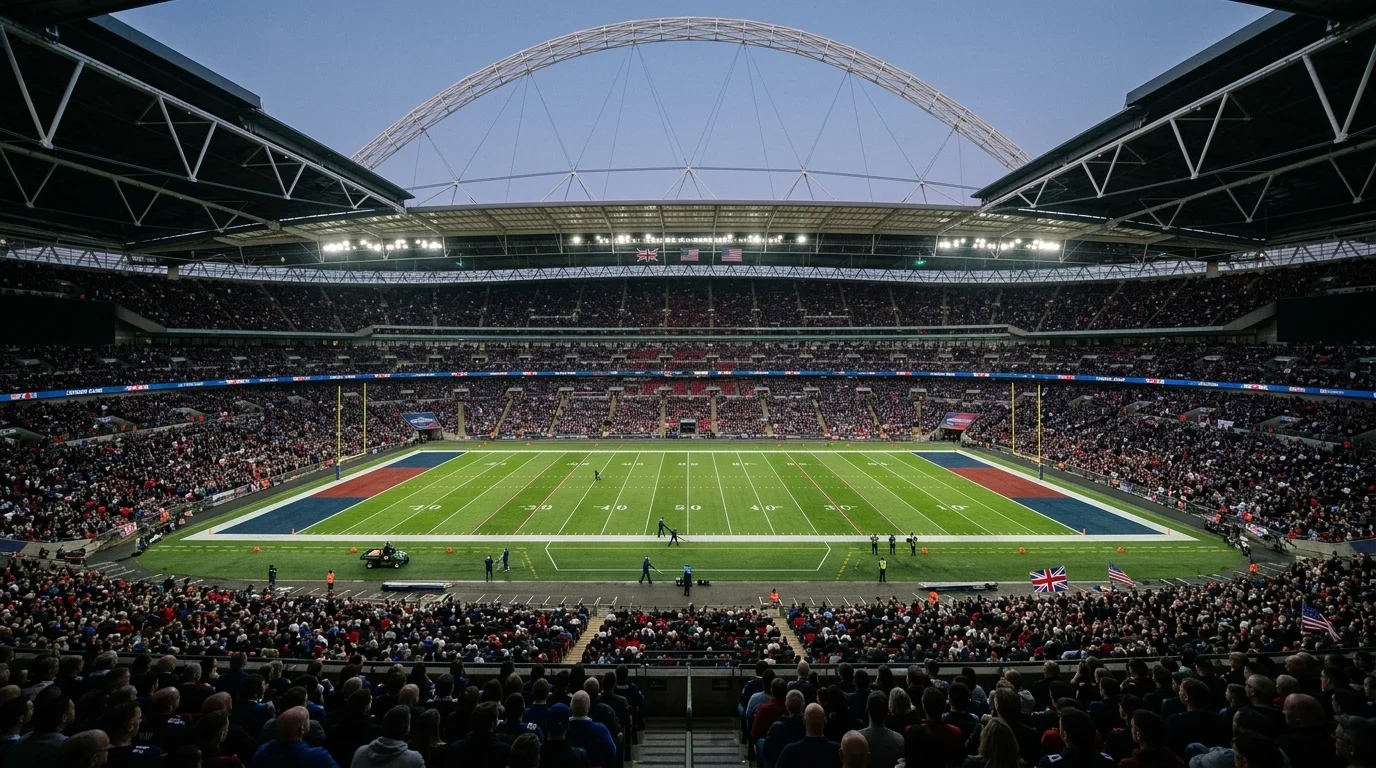
What follows is the rule layer: the legal framework, the bet types, the odds formats, the settlement conventions when matches end strangely, and the responsible-gambling architecture. Strategy and prediction models live elsewhere on the site.
What NFL Betting Looks Like From a UK Sofa
When my landlord asked me at breakfast last autumn whether I was watching golf on his TV, he was actually looking at the third quarter of a Bills game with the spread movement scrolling across the chyron. NFL betting in the UK has crawled out of the dark corners of the bookmakers and into the same Sunday-afternoon furniture as Premier League football. It is one of the fastest-growing sports on Sky Sports by handle, and the Channel 5 free-to-air arrangement has pushed the league into homes that had never seen a kickoff.
The mechanics are straightforward. A UK NFL bet is a wager placed with a UK Gambling Commission-licensed sportsbook on the outcome of an NFL match, a season-long performance or an individual player statistic. The transaction can happen at a high-street shop, through a sportsbook website, inside a native mobile app or on an exchange platform where punters back and lay against each other rather than against a bookmaker. The legal apparatus is the same regardless of channel, which is precisely the point Britain's regulator hammers home: the licence travels with the operator, not the medium.
UKGC — the UK Gambling Commission, the single regulator for all commercial gambling in Great Britain since the Gambling Act 2005 came into force.
Sportsbook — an operator licensed to take fixed-odds bets on sporting events; in the UK, "bookmaker" is the older equivalent term.
GBD — General Betting Duty, the tax paid by sportsbook operators on the gross profit they generate from fixed-odds wagers, currently set at fifteen percent.
How widely is American football now bet on in this country? Almost half of British adults — forty-eight percent in the most recent Gambling Survey for Great Britain wave that ran from July to October 2025 — engaged with some form of gambling in the previous four weeks. Take out the lottery-only crowd and the figure drops to twenty-seven percent. Sports betting specifically is participated in by sixteen percent of British men and four percent of British women, the widest gender gap of any gambling activity tracked. NFL doesn't account for the lion's share of that volume — that remains football and horse racing — but the British NFL audience, around fourteen million people, gives the league more than enough scale to operate as a stand-alone betting category.
The NFL maintains a dedicated UK and Ireland office in London that runs the international programme, broker the broadcast deals and oversees fan engagement. The league itself isn't licensed by the UKGC — it doesn't need to be — but every operator that prices NFL matches for British customers must hold a current remote betting permit.
Legal, Licensed, and Taxed at the Operator's End
Once a month or so a friend who's read a US article about state-by-state legalisation asks me whether I'm taking some kind of risk by having sportsbook apps on my phone. The honest answer is that the British betting environment is one of the most legally settled markets in the world. NFL betting from the UK has been unambiguously legal since the Gambling Act 2005, which built a national licensing regime around a single regulator and erased the geographic patchwork that still characterises the American sports betting landscape.
That regulator is the UK Gambling Commission. Any operator that wants to take a bet from a customer based in Great Britain — regardless of where the operator's servers, headquarters or call centre sit — must hold a UKGC remote licence under what's known as the point-of-consumption framework. The licence carries a code of conditions covering anti-money-laundering checks, advertising standards, age verification, marketing restrictions and a long catalogue of responsible-gambling obligations.
NFL betting is fully legal across England, Wales, Scotland and Northern Ireland for adults aged eighteen and over, provided the operator holds a current UKGC remote betting licence. Operators without that licence cannot lawfully accept a wager from a British customer, and bets placed with an unlicensed offshore site are not enforceable under UK consumer law.
The scale of the industry reflects the legitimacy of the framework. The total gross gambling yield generated in Britain in the financial year ending March 2025 reached sixteen point eight billion pounds, up seven percent on the previous year, with the remote casino, betting and bingo subsector contributing seven point eight billion of that figure. Andrew Rhodes, the UKGC's chief executive, framed the moment plainly to operators at the ICE 2025 world regulatory briefing: "Discussions with operators are showing a widening out of the sports offering in particular, with sports beyond the traditional horseracing and football growing in use, such as cricket, basketball, NFL and a host of other US-based sports."
The duty structure deserves a paragraph of its own. General Betting Duty, which applies to remote and high-street sportsbook turnover on events such as NFL matches, currently sits at fifteen percent of operator gross profit. Remote Gaming Duty, which covers casino and slot products, sits at twenty-one percent. Neither figure is passed on to the punter as a withholding tax. Britain remains one of the only major regulated markets in the world where individual gambling winnings — including five and six-figure NFL accumulators — are not assessable for income tax or capital gains tax purposes.
The UK Gambling Commission was established under the Gambling Act 2005, with its remit later extended by the Gambling (Licensing and Advertising) Act 2014 to cover all operators serving British customers, irrespective of where the operator is based. The public register of every licensed operator is searchable on the UKGC's website. Northern Ireland operates under its own betting-shop legislation for retail premises, though most remote NFL betting from Northern Ireland flows through UKGC-licensed sites.
The NFL Bet Types That Run a UK Slip
A friend texted me his first NFL betting slip last November: four legs, all from the same lunchtime kick-off, two of them correlated, and an alt-line on a tight end he'd never heard of. He wanted to know whether it was a parlay, a same-game parlay or a bet builder. The answer was that all three names exist and his sportsbook decided which one applied, which is roughly the most British answer possible.
Bet types on UK NFL markets have proliferated to the point where any introduction has to triage. The three primary markets — moneyline, point spread and totals — make up the spine of every game card. Around them sit prop bets, futures, teasers, accumulators and exchange products. The American Gaming Association projects roughly thirty billion dollars in legal NFL handle through US sportsbooks across the 2025 season, up about eight and a half percent on the previous year. That figure matters in the UK because it sets the depth of pricing that flows downstream to British operators, who hedge into the same underlying liquidity pool.
The deep mechanics, edge cases and pricing logic for every bet type are covered in the cluster article on NFL bet types in UK sportsbooks. The summaries that follow are the working knowledge needed to read a slip without flinching.

Moneyline: pick the winner, no handicap
The moneyline is the simplest market on a football board. You pick a team to win the game outright; the price reflects the implied probability of that outcome. The favourite trades at a shorter price than evens; the underdog trades longer. In the UK, prices land in fractional or decimal form: a Chiefs favourite might be 4/11 fractional or 1.36 decimal. The same team in American notation would show as -275.
Same moneyline, three formats
Fractional 4/11 = Decimal 1.36 = American -275 — roughly 73% implied probability of landing.
Fractional 7/2 = Decimal 4.50 = American +350 — roughly 22% implied probability of landing.
There's no draw line on a US moneyline by default, but UK books increasingly offer a three-way moneyline on selected games, where the regular-time tie pays out at a much longer price. If the score is level at the final whistle on a two-way moneyline, settlement waits for overtime to resolve a winner — and in the rare regular-season case where overtime itself ends drawn, the bet is a push and your stake is refunded.
Point spread: handicap the favourite, level the price
The point spread takes a one-sided matchup and levels it by handing the underdog a virtual head start. A line of Chiefs -6.5 means the favourite needs to win by seven or more for the bet to land. The other side, Bills +6.5, wins if the underdog loses by six or fewer or wins outright. Spread prices typically sit at 10/11 a side — minus one-ten in American, 1.91 decimal — which builds the bookmaker's margin into both sides of the market.
A whole-point spread occasionally lands exactly on the number, producing a push: stakes are refunded, no winner, no loser. Half-point spreads such as the -6.5 in the example above are designed to avoid pushes entirely. UK sportsbooks publish alternative spreads either side of the main line — Chiefs -3.5, -4.5, -5.5, -7.5 and so on — at altered prices, allowing punters to target their preferred number.
Totals: combined points over or under a line
A totals bet — sometimes called the over/under, sometimes simply "the total" — asks whether the combined final score of both teams will go over or under a posted number. A line of 48.5 means you're betting on the game finishing 49 or more for the over, or 48 or fewer for the under. NFL game totals run between roughly 37 and 56 depending on offence, defence, weather and rest.
Like the spread, totals are typically priced at 10/11 a side. A whole-number total that lands exactly on the line pushes and refunds. Most UK sportsbooks offer alternative totals — 45.5, 46, 46.5, 47 and so on — at altered prices.
Prop bets
Wagers on individual player or team performance: passing yards, rushing touchdowns, first-half receptions, first scorer.
Futures (outrights)
Season-long bets on Super Bowl winner, conference winner, divisional winner, MVP and similar end-of-season markets.
Teasers
Multi-leg bets where the punter buys points across each leg in exchange for a reduced compound payout.
Accumulators and parlays
Multi-leg bets where all selections must land for the ticket to pay; odds multiply rather than add.
Same game parlays / bet builders
Multi-leg bets within a single match, with operator-applied correlation adjustments to the price.
Exchange markets
Peer-to-peer back-and-lay pricing on Betfair Exchange; commission charged on net winnings.
Beyond these families sit live in-play markets and a long catalogue of Super Bowl novelty markets — coin toss, anthem length, halftime show set lists. Every one carries its own settlement convention.
Three Odds Formats, One Underlying Price
A few seasons ago I sat in a Wembley NFL crowd with two Americans who couldn't read fractional, an Australian who couldn't read American, and an Englishman who'd never seen a decimal price displayed anywhere. Same game, same line, three different ways of writing it. UK sportsbooks now let you toggle between all three formats on the same screen, which makes the choice partly a habit and partly a matter of where you do your line shopping.
Fractional odds are the UK default, the format you'll see on every paper coupon and most retail screens. A price of 7/2 means seven pounds of profit per two pounds staked on a winning bet. Add the stake back to the profit and your total return on a winning two-pound ticket is nine pounds. Fractional notation maps cleanly onto British sporting culture, but it can be unwieldy at very short or very long prices: 1/100 to land an obvious favourite, or 80/1 to win the Super Bowl outright eight months out.
Decimal odds, sometimes called European odds, multiply the stake directly. A price of 4.50 decimal means a successful one-pound ticket returns four pounds fifty including stake. Decimal pricing is the standard on Betfair Exchange and most cross-European operators, and it has the practical advantage of being the easiest format to compare across two prices: 1.91 is unambiguously shorter than 1.95, whereas working out whether 10/11 is shorter than 11/12 requires either a calculator or a clear head.
American odds — the format the NFL itself uses — denote either the profit on a hundred-pound stake (positive line) or the stake needed to win a hundred pounds of profit (negative line). A favourite at -150 needs a 150-pound stake to win a hundred; an underdog at +220 yields 220 pounds of profit on a hundred-pound stake. American pricing is unintuitive on first contact but ergonomic around the -110 / +100 zone where most NFL spreads and totals live.
| Fractional | Decimal | American | Implied probability |
|---|---|---|---|
| 10/11 | 1.91 | -110 | 52.38% |
| 6/4 | 2.50 | +150 | 40.0% |
| 4/11 | 1.36 | -275 | 73.3% |
| 9/2 | 5.50 | +450 | 18.2% |
The same price in three formats is the same bet. What changes is your ability to read it under time pressure — a live line moving from 1.85 to 1.95 jumps out faster on a decimal screen than the equivalent shift from 17/20 to 19/20.
The same Chiefs -3 spread, three ways
Fractional 10/11. Decimal 1.91. American -110.
The implied probability of the bet landing is 52.38%. The four-percentage-point gap above 50% is the bookmaker's margin — also called the vig, juice or overround.
UK sportsbooks let punters choose their display format in account settings, and many show two of the three side by side on bet-builder screens. The cluster on NFL odds formats for UK punters walks through the full conversion arithmetic, implied probability calculations, and how to strip the bookmaker's margin out of a posted price to estimate fair odds — useful both for line shopping and for spotting the occasional value market in the run-up to a Super Bowl.
Accumulators and the Maths That Multiply Risk
A four-leg NFL accumulator I'd placed at lunchtime one London weekend, three legs in, the fourth — a totals line on the late kick — sitting at 47 with the score 23-24 and three minutes on the clock. The first two-point conversion in NFL history would have made me. It didn't. Accumulators are the single category of UK NFL bet most likely to produce both genuine excitement and total heartbreak, often inside the same evening.
An accumulator and a parlay are the same product under different names. UK and Irish sportsbooks tend to favour "accumulator" or simply "acca"; American imports use "parlay". A multi-leg bet combines two or more separate selections into a single ticket where every leg has to land for the whole bet to win. The mathematical attraction is compound: a four-leg accumulator at 10/11 a leg returns roughly twenty-four pounds on a ten-pound stake, against sixteen pounds in profit for four singles at the same prices, because the odds multiply rather than add.
A ten-pound four-leg NFL accumulator
Each leg priced at 10/11 (1.91 decimal).
1.91 × 1.91 × 1.91 × 1.91 = 13.31 cumulative multiplier.
Stake £10 × 13.31 = £133.10 total return, £123.10 profit.
The same four legs as singles at 10/11 each would return at best £16 in cumulative profit.
Push and void handling is the rule layer punters most often miss. If a single leg of your accumulator pushes — say the spread lands exactly on the number — UK sportsbooks remove that leg from the bet, drop the odds multiplier down by one position, and resettle the accumulator on the remaining legs. A four-leg acca becomes a three-leg acca at recalculated odds. The same logic applies to a fully voided leg, such as a postponed match: the bet is not lost, just resized.
A leg that loses, by contrast, takes the whole bet with it. That asymmetry — push lenient, loss terminal — is what makes accumulators both seductive and treacherous.
Same game parlays — sometimes called same game multis or SGPs — take the parlay inside a single match. You can string a Chiefs spread, a totals over and a Mahomes passing-yards over from the same game, with the operator applying a correlation adjustment so that linked outcomes don't multiply too generously. Most UK operators use "bet builder" interchangeably with same game parlay, though menus and leg limits differ.
Volume here is rising sharply. Entain — the parent company of Ladbrokes and Coral — reported a sixty-five percent year-on-year increase in British and Irish NFL punters across the 2024-25 season, with sixty percent more bets placed and a forty-six percent increase in aggregate stake value.
The cluster on NFL parlay and accumulator rules in the UK covers leg push permutations in full, correlated-leg restrictions, max-payout caps and the operator-by-operator differences in same game parlay menus.
Futures, Outrights, and the Super Bowl LX Year
A Chiefs Super Bowl LX ticket I placed in May 2025 at 7/1 still hadn't settled by October. The team had lost twice already, yet the price had compressed to 5/1 because the market liked their schedule. That's the texture of an NFL outright: a position you carry through autumn and winter while the underlying market continually re-prices around you.
A future, or outright, is a bet placed on a season-long outcome rather than a single match. The category includes Super Bowl winner, conference winner, divisional winner, MVP, team season win totals, and a long list of award and statistical futures — leading rusher, leading receiver, defensive player of the year. UK sportsbooks open Super Bowl LXI markets — for the February 2027 edition — within hours of the previous Super Bowl finishing, which means a portion of the British punting population spends much of February holding a fresh ticket on a season that hasn't started yet.
The cultural pull of these markets compounded around Super Bowl LX, which took place on the 8th of February 2026 in Santa Clara, California. The American audience for LX hit 125.6 million viewers across Nielsen's combined panel and digital measurement, making it the second-largest Super Bowl audience on record. About 76 million American adults wagered on some NFL match across the 2024-25 season, with 68 million wagering specifically on Super Bowl LIX. The UK numbers run smaller in absolute terms but increasingly significant as a share. Henry Hodgson, the NFL's UK and Ireland general manager, summarised the cultural reach succinctly after Super Bowl LVIII: "The viewership, combined with the social engagement through Super Bowl week, is a testament to the growth of the NFL in the U.K., particularly among the youth demographic that we've targeted this season."
UK Super Bowl markets open earlier each year. Outrights are typically priced in fractional form by British sportsbooks and in decimal on Betfair Exchange. Cash-out on futures is available at most UKGC-licensed operators, though the cash-out value reflects the current implied probability minus a holding margin — sometimes a substantial one in the months before the playoffs.
Every NFL team's Super Bowl winner future is available year-round at UKGC-licensed sportsbooks. The longest pre-season price on a 32-team board typically sits between 200/1 and 500/1 for the bottom-tier outsiders, before any games have actually been played.
Settlement rules matter most on these long-dated bets. A team that relocates mid-season is treated as the same franchise for futures-settlement purposes by most operators. Player MVP futures void if the player retires before the award announcement; co-MVP outcomes trigger a dead-heat split. The full mechanics for divisional and conference markets, MVP futures, season win totals and the Super Bowl winner market are covered in the cluster on NFL futures and Super Bowl betting from the UK.
London Three, Dublin One: The Home-Soil Calendar
I sat in Croke Park on a damp Sunday in September 2025 while a Steelers fan from Pittsburgh — who'd flown via JFK and Heathrow to reach Dublin — explained to me in good baffled English that he'd "never seen so much hurling on a pitch built for football." He meant the GAA emergence of Croke Park as the host of an NFL game; the Vikings and the Steelers were both warming up thirty feet away. That match, watched by 74,512 in person and by 7.9 million more across NFL Network's combined television and digital feed, was the first regular-season fixture the league has staged in Ireland, and it set the second-highest international viewership figure ever recorded by the broadcaster — sixty-eight percent above the 2024 international average.
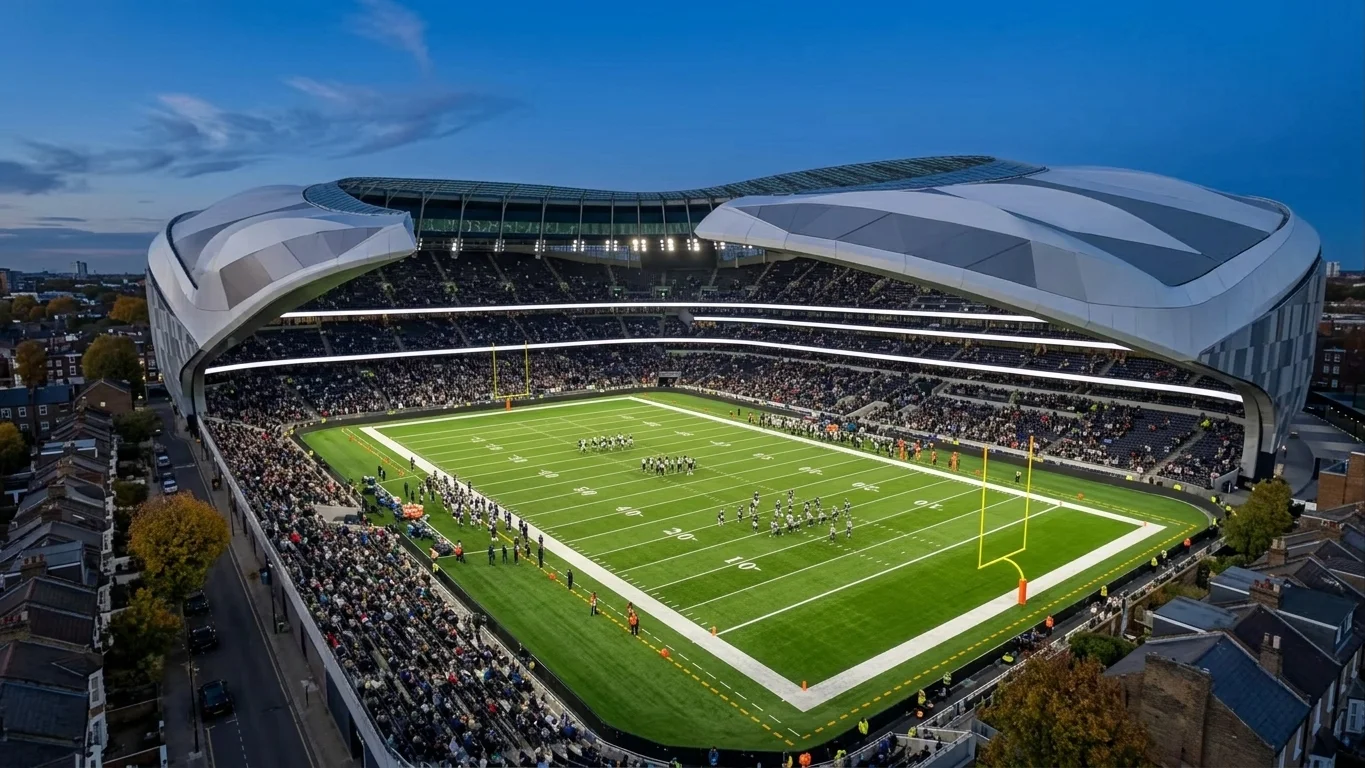
The UK and Ireland calendar has become an integral piece of the NFL's season rather than a curiosity. Across nineteen seasons of London games, the league has played forty-two regular-season fixtures in Britain through the end of 2025, with no London match in living memory attracting an attendance below 60,000. The 2025 schedule alone featured seven international matches — London three, Dublin, Berlin, Madrid and São Paulo one apiece — and the league has confirmed a record-breaking nine international fixtures for 2026, including debuts in Melbourne, Rio de Janeiro and Paris, with London retaining three games at Tottenham Hotspur Stadium and Wembley.
42
Regular-season NFL games hosted in the UK across nineteen seasons through the end of 2025.
74,512
Attendance at Croke Park for the first NFL game in Ireland, on the 28th of September 2025.
7.9 million
NFL Network combined TV and digital viewers for the Vikings vs Steelers Dublin debut.
9
International games scheduled by the NFL for the 2026 season — a record for the league.
UK kick-off times for London games sit in the 2:30pm or 6:30pm BST window depending on the slot, which lets a British punter settle a same-day accumulator by Sunday teatime rather than waiting until two in the morning the way an American late kick demands. Sky Sports and Channel 5 carry the live feed; in-play markets stay active across all four quarters. Henry Hodgson, the NFL UK and Ireland general manager, put the league's ambition plainly: "We want to be a top-three sport in the UK. We know that right now we're not there, but we have our sights set on that ambitious goal."
The Jaguars and the Patriots played in front of 86,651 at Wembley in October 2023 — the largest crowd ever to attend an NFL London game.
Pricing on London and Dublin games tracks the American slate, but two factors create edge for the careful UK punter. The first is jet lag, which favours the team that's been in Europe longer. The second is the neutral-stadium effect: home-field advantage, normally worth two to three points on a spread, doesn't apply when the game is played in front of 80,000 Londoners or 74,000 Dubliners with no particular loyalty.
Pushes, Voids, and the Other Awkward Endings
The single most-asked question I get from UK NFL punters — every Sunday, every season — is some variant of "wait, why is my bet showing as voided?" Settlement is where betting slips go to die before they win.
UK sportsbooks operate under settlement rules codified inside each operator's published terms and conditions, with a common spine inherited from how the British market has handled horse racing and football for decades. Five settlement outcomes cover almost every NFL edge case: win, lose, push, void and dead heat. Each has its own consequences for singles, accumulators and bet builders.
A push happens when a bet lands exactly on the line. A point spread of -3 followed by a three-point margin of victory is a push: stake returned, no profit, no loss. A totals line of 48 in a game finishing 24-24 is a push. Half-point lines were invented to make pushes impossible, which is why UK sportsbooks offer alt-line markets at 47.5 and 48.5 alongside the main 48.
A void cancels the bet entirely and refunds the stake. NFL games postponed beyond a sportsbook-defined window — usually 48 to 72 hours — are voided. Player props on athletes scratched from the active roster before the opening drive are voided. The threshold for "did the bet have a fair chance to resolve" sits at the heart of every void decision.
Void and push both return your stake, but they're not the same thing inside an accumulator. A push removes the leg and resizes the bet down to fewer legs at recalculated odds; a void does the same. The distinction matters most when a leg is partially graded — for example, a half-point alt-spread that loses by a hair sits as a clean loss, not a push.
Dead heat applies to outright and prop markets where two or more selections finish level. The first touchdown scorer market is the classic case: if two players score on the same play, the formula divides the original stake equally across the tied selections, settles each portion at the original odds, and pays out accordingly. Most UK operators apply the same logic to anytime scorer markets.
Do
- Check the operator's specific terms on prop voids when a player is inactive — they differ between sportsbooks.
- Log the exact spread or total you took, in case the line moves before settlement.
- Keep screenshots of contested settlements; the customer-service team will ask for them.
- Read the small print on whether overtime counts for second-half and quarter markets — it usually does for full-game props.
Don't
- Assume that a "no action" verdict on a US sportsbook applies in the UK; British books typically treat it as a void.
- Expect a same-game parlay leg to push the way a standard leg does — SGP recalculation rules vary by operator.
- Chase a voided futures stake into the next season unless the operator has explicitly offered that as a goodwill option.
- Treat a "postponed" decision as automatic refund; check the rescheduling window in the T&Cs first.
Live betting compounds the complexity. A line that moves during a coach's challenge and is then accepted before the review concludes can be retrospectively suspended. The operator's clock, not yours, decides whether a wager stands.
Why Your Winnings Are Yours to Keep
An American friend forwarded me his Super Bowl LIX winnings spreadsheet last February. Three columns: gross winnings, withholding, net. The withholding column took a slice. My equivalent UK spreadsheet would have been one column wide and one row long.
UK gambling winnings — including five-figure NFL accumulator wins, six-figure Super Bowl outright wins and the long-shot first touchdown scorer ticket that lands at 25/1 — are not assessable for income tax, capital gains tax or any other personal tax in the United Kingdom. HMRC's position is unequivocal: the punter has not produced a taxable supply by placing a bet, because the bookmaker has already paid duty on the gross profit at the operator end. The chain stops there.
General Betting Duty on remote and high-street fixed-odds NFL betting sits at fifteen percent of operator gross profit. Remote Gaming Duty, which applies to casino and slot products, sits at twenty-one percent. Both rates are inflation-flat in 2026 but are subject to budget review and have moved upward over previous decades.
This isn't a quirk; it's deliberate British tax policy stretching back to the 2001 reforms that abolished the old turnover-based betting tax and replaced it with the GBD framework. Operators absorb the duty into their margin, and the margin shows up in the prices on screen — every -110 spread carries a couple of percentage points of operator vig that funds the duty payment. You pay it without thinking about it.
A 200-pound stake on a 50/1 first touchdown scorer ticket that lands returns 10,200 pounds gross and 10,200 pounds net to the punter. The operator's GBD payment to HMRC on the activity that generated the win is calculated on the bookmaker's full quarterly gross profit, not on any individual bet — which is why the tax never appears on a personal receipt.
The HMRC-friendly status extends to anyone resident in the UK for tax purposes. Stick with UKGC-licensed operators and the arithmetic on the screen is the arithmetic in your account.
The Tools UKGC Has Built Around You
The hardest piece I've written in a decade of covering this market was about a friend who lost more on NFL futures across one autumn than he'd earned that quarter. The UK system caught him before he hit the bottom, but only just. The regulatory architecture around problem gambling in this country is a layered set of obligations rather than a single firewall, and it pays to understand the rails you're operating between.

About 1.4 million British adults — roughly 2.7 percent of the population — show signs of serious problem gambling according to the most recent Gambling Survey for Great Britain results, drawn from a sample of nearly twenty thousand respondents. Andrew Rhodes, the UKGC's chief executive, framed the response to operators directly: "This year's findings deepen our understanding of consequences from gambling and provide crucial insight into risk profiles among those who gamble most frequently. We strongly encourage operators to use this evidence to consider the risks within their own customer bases."
NFL betting fits the same risk profile as any other sports market. The frequency of fixtures, the depth of in-play menus and the appeal of multi-leg accumulators all amplify both engagement and exposure. The tools built around the punter exist to slow down decision-making, not to remove it.
The 2025 reform calendar has tightened the rails materially. Online slot stakes were capped at five pounds per spin for adult players from April 2025, and at two pounds per spin for the 18-to-24 age bracket from May 2025. Light-touch financial vulnerability checks now trigger at a net deposit threshold of 150 pounds per month, down from the 500-pound threshold that applied between August 2024 and February 2025. The checks draw on credit data the operator already has rather than asking the customer for bank statements.
Five settings to switch on before your first NFL bet of the season
- Set a deposit limit at account opening — not a stake limit, a deposit limit, which caps the funds available across all markets.
- Set a session-time limit on the mobile app, with a reasonable default at sixty or ninety minutes per session.
- Switch on reality checks at fifteen-minute intervals; they pop a notification mid-session showing time elapsed and net position.
- Use the self-assessment tools published by GambleAware and the operator itself — they're brief, anonymous and useful.
- Save the GAMSTOP registration page as a bookmark for the moment you might need it.
Self-exclusion through GAMSTOP, the single national multi-operator exclusion scheme, blocks a registered customer from every UKGC-licensed sportsbook in one application. A six-month minimum applies; one-year and five-year options are also available. The full regulatory framework — financial checks, stake limits, GSGB findings, the statutory levy that funds research and treatment — sits in the cluster on UK NFL gambling regulation, taxation and responsible-gambling framework.
Choosing Where to Bet: A Filter, Not a Recommendation
Every January, when the playoffs heat up, a half-dozen friends with no real NFL exposure ask me which sportsbook they should open an account at. I refuse to answer that question on principle. What I do answer — at length, often over a pint — is the more useful version: what to look for when choosing one yourself.
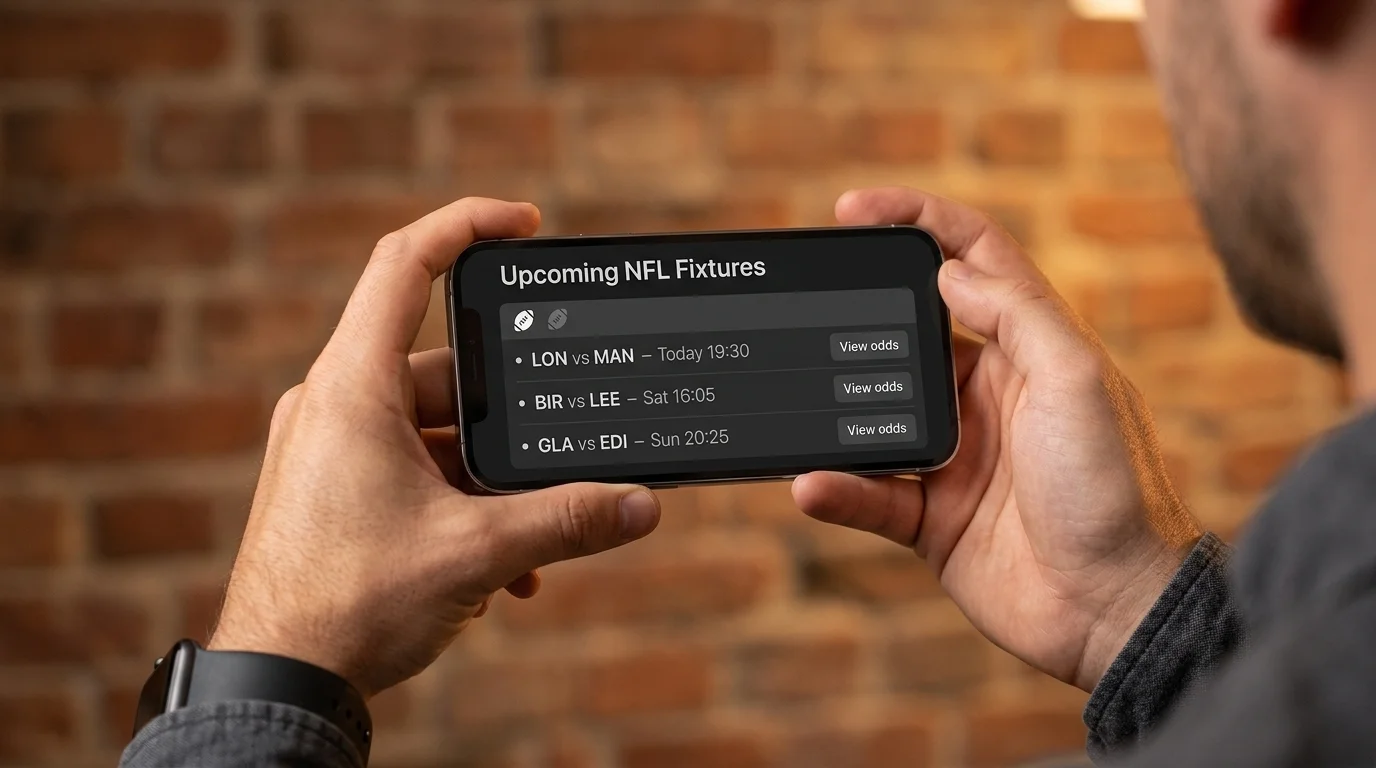
The first filter is the UKGC licence. Every sportsbook that legitimately accepts British NFL bets sits on the regulator's public register; if a site isn't listed, it isn't legitimate, and no bet you place there is enforceable. That single check rules out most of the offshore propositions you'll see advertised in low-quality search results.
Beyond licensing, the market has matured into a competitive ecosystem with measurable differences across operators. Sky Sports extended its NFL broadcast rights through the 2027-28 season in an arrangement that adds roughly fifty percent more match coverage, full RedZone integration and every London and Dublin fixture. Paddy Power signed a multi-year arrangement as the official sportsbook partner of NFL UK and Ireland in September 2025, becoming the first operator to hold that specific designation. William Hill, on the most recent PPC click-share data published in early 2026, carries about thirty-eight percent of paid sports betting search traffic in the UK. These data points describe the shape of the market rather than the quality of any operator's NFL offering — market share isn't an endorsement.
| What to compare | What strong looks like | What weak looks like |
|---|---|---|
| NFL market depth | Alt lines, full prop menu, season-long futures, bet builder | Three core markets only, limited props |
| In-play latency | Sub-second bet confirmation, frequent re-pricing | Multi-second confirmation, slow market reopen after challenges |
| Accumulator features | Bet builder with custom prop combinations, leg-cap displayed | Standard parlay only, no SGP, hidden leg caps |
| Cash-out availability | Full and partial across most markets, including futures | Flagged markets only, no live cash-out on props |
| Responsible-gambling tools | Full UKGC suite — deposit, loss, session and reality-check controls | Full UKGC suite — these are mandatory; absence means unlicensed |
| Deposit and withdrawal speed | Same-day card withdrawals, instant deposits, open banking | Multi-day withdrawal queues, narrow payment options |
Do
- Open the UKGC public register and check the operator's licence number before depositing a single penny.
- Set a deposit limit on the account before placing a first bet.
- Read the bet-builder terms specifically; correlation restrictions differ between operators.
- Keep a written log of bonus terms; wagering requirements are not standardised across operators.
Don't
- Chase a welcome offer on a site you wouldn't otherwise have considered using.
- Assume a partnership badge implies superior pricing — confirm against another book on the same line.
- Sign up for an offshore site advertising "tax-free" winnings; that's the default in the UK regardless of where you bet.
- Open multiple accounts in the same household using the same payment method without reading the joint-account terms.
Questions UK Punters Keep Asking
Is NFL betting legal in the UK?
Yes. NFL betting has been fully legal in the United Kingdom since the Gambling Act 2005, with the regime extended to all operators serving British customers under the Gambling (Licensing and Advertising) Act 2014. Any sportsbook accepting wagers from a British customer must hold a UK Gambling Commission remote betting licence under the point-of-consumption framework. The licence applies regardless of where the operator's headquarters or servers sit, and the public register is searchable on the UKGC's website.
Are NFL winnings taxed in the United Kingdom?
No. Individual punter winnings on NFL bets — including five-figure accumulator wins and six-figure Super Bowl outrights — are not assessable for income tax, capital gains tax or any other personal tax in the UK. HMRC treats the bookmaker as the taxable entity, with General Betting Duty paid at fifteen percent of operator gross profit. The duty is absorbed into the price you see on screen rather than being deducted from your winnings as a withholding tax.
What does a point spread mean in NFL betting?
A point spread handicaps the favoured team by a virtual number of points to level the betting market. A line of Chiefs -6.5 means the favourite must win by seven or more points for a spread bet to land; the other side, Bills +6.5, wins if the underdog loses by six or fewer or wins outright. Spread prices typically sit at 10/11 a side — equivalent to 1.91 decimal or -110 American — which builds the bookmaker's margin into both sides of the market.
How do moneyline bets work for NFL games?
A moneyline bet pays out if the team you pick wins the game, regardless of margin. The favourite trades at a shorter price than evens; the underdog at a longer one. Most UK moneylines are two-way and include overtime, so a regular-season game tied after overtime is treated as a push, refunding the stake. Three-way moneylines, which price the regular-time tie separately, are available on selected games and pay out at a longer price for the draw outcome.
What happens to my NFL bet if the game ends in a push?
A push happens when the final score lands exactly on the line — for example, a -3 spread followed by a three-point margin of victory, or a totals line of 48 in a 24-24 game. UK sportsbooks refund the stake; the bet neither wins nor loses. Inside an accumulator, a pushed leg is removed from the bet and the remaining legs are resettled at the recalculated multiplier, so a four-leg acca with one push becomes a three-leg acca at new odds.
Can British punters bet in-play on NFL matches?
Yes. UKGC-licensed sportsbooks offer comprehensive in-play markets across every NFL fixture, with live moneyline, spread, totals and prop pricing through all four quarters and overtime. Markets are typically suspended during coach's challenges, injuries and reviews before re-pricing on the next drive. Cash-out is available on most live markets, though the cash-out value carries a margin that reflects the operator's holding cost.
Articles
Created by the "NFL Betting Rules" editorial team.
